
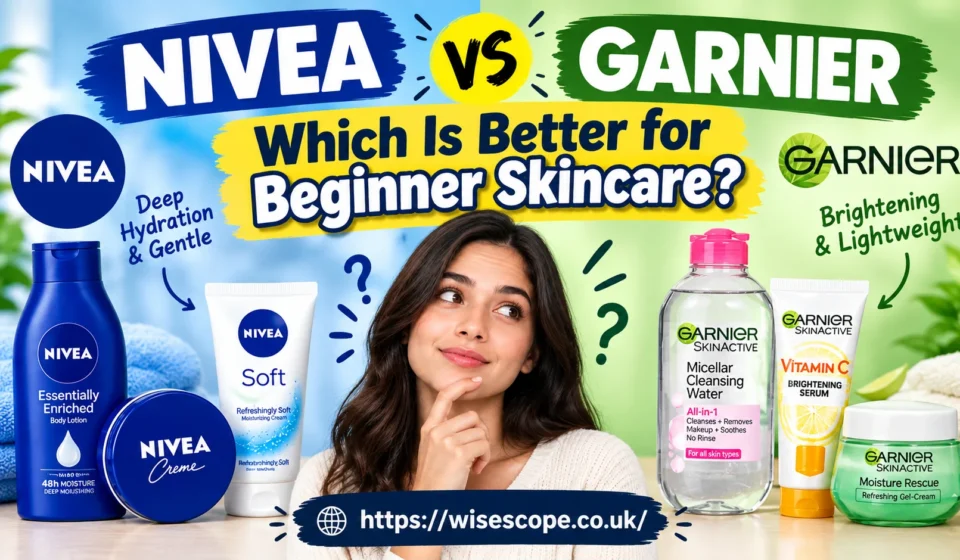

You stood in the skincare aisle for way too long, didn’t you? Phone in one hand, three different “best skincare for beginners” reels open in tabs, and two bottles in the other hand — one blue, one green. Nivea on one side, Garnier on the other. And somewhere in your head, a quiet, slightly panicked voice asked:
“I’m a skincare beginner — is Nivea a good starting brand compared to Garnier, or am I about to waste money and mess up my skin before I even start?”
Take a breath. That question alone puts you ahead of most beginners, because it means you’re not just grabbing whatever influencer told you to buy — you’re actually trying to make the right first move. And here’s the reassuring part: you can’t really go wrong with either brand.
Both Nivea and Garnier have been trusted on drugstore shelves for decades, both are gentle enough for someone just starting out, and both won’t drain your wallet if a product doesn’t end up being “the one.”
The real question isn’t which brand is objectively better — it’s which one is better for your skin, right now, at the very start of your skincare journey. And that’s exactly what we’re going to break down, step by step, so you can walk back into that aisle next time and pick with actual confidence instead of a 50/50 guess.
Just like choosing the right skincare brand comes down to understanding your skin’s real needs rather than guessing, getting the most out of a big purchase works the same way. If you’re curious how everyday settings can affect performance elsewhere, our guide on whether Cadillac Lyriq driving modes offer different ranges or battery usage breaks it down in the same practical, no-fluff style.
Quick Answer
Nivea and Garnier are both solid, low-risk choices for a beginner — neither one is going to wreck your skin. The real difference is in what each brand focuses on:
- Nivea leans into deep hydration and simple, fuss-free moisturizers. Great if your skin tends to feel dry, tight, or sensitive.
- Garnier leans into brightening, cleansing, and lightweight hydration with plant-based ingredients. Great if your skin leans oily, combination, or dull-looking.
Neither brand is “better” overall — it comes down to what your skin actually needs, and how each one feels on your face day to day.
Why Beginners Keep Landing on These Two Brands
Before comparing them head-to-head, it helps to understand why these two brands, out of hundreds, keep coming up in beginner conversations.
Nivea and Garnier both sit in the same shelf category: affordable, mass-market skincare you can pick up without planning a special trip. Nivea is owned by Beiersdorf, a German company that’s been making skin products since 1911, when its very first Nivea Creme was created.
Garnier belongs to L’Oréal, one of the largest beauty companies in the world, and it built its identity around “natural” ingredients long before that became a buzzword everywhere else.
Because both brands have been around for decades, they’ve had a lot of time to refine formulas that work for average skin, in average conditions, without needing a skincare degree to use them correctly.
That’s exactly what makes them beginner-friendly. You’re not gambling on some new indie brand that popped up on social media last month — you’re using something your mum or your neighborhood pharmacist has probably already tried.
How to Identify Your Skin Type First
You can’t really compare Nivea and Garnier for your skin until you know what your skin actually is. This takes two minutes and it’s more reliable than guessing based on how your skin “feels” on any random day.
The simple test: Wash your face with a mild cleanser, pat it dry, and don’t apply anything else. Wait 25 to 30 minutes, then check your skin in a mirror and gently press some blotting paper or a clean tissue against different areas of your face.
- Dry skin – Feels tight, sometimes flaky or rough, and rarely looks shiny anywhere. It may sting slightly when you use certain products.
- Oily skin – Looks shiny across your whole face, especially the forehead, nose, and chin. The blotting paper picks up visible oil almost everywhere.
- Combination skin – Your T-zone (forehead, nose, chin) looks oily and picks up oil on the blotting paper, while your cheeks stay dry or normal. This is one of the most common skin types among beginners.
- Sensitive skin – Reacts quickly to new products with redness, itching, stinging, or small bumps, even from things labeled “gentle.” Sensitivity can happen alongside any of the other four types.
- Normal skin – Feels comfortable with no tightness or excess shine, and rarely reacts badly to new products.
Once you know which of these describes you, choosing between Nivea and Garnier (and picking the right product within each brand) becomes much easier.
Nivea: The Comfort-First Brand
Nivea’s whole reputation was built on one product: the little blue tin of Nivea Creme. That cream hasn’t changed much since it launched, and it’s still one of the most recognizable moisturizers in the world.
What that tells you about Nivea as a brand is this — comfort and hydration come first. Most of their bestsellers are moisturizers, body lotions, and creams built around glycerin, one of the most effective and well-studied hydrating ingredients in skincare. Glycerin works by pulling water into your skin and helping it stay there, which is exactly what dry or sensitive skin needs.
If your skin often feels tight after washing your face, flakes in patches, or reacts badly to strong products, Nivea is a gentle place to start. Their formulas tend to avoid anything too aggressive, which means fewer surprises for someone still learning what their skin can and can’t handle.
Where Nivea sometimes falls short for beginners is variety in texture. A few of their creams are on the richer, heavier side, which can feel amazing in winter but a little too much if you have oily or combination skin, especially in warmer weather.
Garnier: The Freshness-First Brand
Garnier tells a different story. Instead of leaning on one iconic product, it built its identity around “natural,” plant-based ingredients — things like green tea extract, vitamin C, and botanical waters. Their micellar waters are probably their most famous product worldwide, loved for removing makeup and cleansing skin without leaving it feeling stripped or greasy.
This focus makes Garnier a strong pick if your priorities are: cleansing well, brightening dullness, or keeping oily and combination skin under control without stripping it dry.
Their moisturizers also tend to feel lighter than Nivea’s, which oily-skinned beginners often prefer, since heavier creams can sometimes feel like too much on skin that already produces extra oil.
The one thing to watch with “natural” branding, though: natural doesn’t automatically mean gentler or better for your skin. Plant extracts and fragrances, even when labeled natural, can occasionally cause irritation in people with sensitive skin. If you already know your skin reacts to fragrance, that’s worth keeping in mind regardless of which brand you’re using.
A Word of Caution for Sensitive Skin
This is worth repeating on its own, because it trips up a lot of beginners: words like “natural,” “gentle,” or “botanical” on a label are marketing terms, not guarantees. They aren’t regulated the same way medical claims are, so a product can call itself gentle and still contain a fragrance or plant extract that irritates your specific skin.
The same goes for Nivea’s “soothing” and “dermatologically tested” labels — dermatologically tested means it was checked for general skin compatibility, not that it’s guaranteed safe for every individual’s skin.
If you have known sensitivities, always check the full ingredient list, not just the front-of-bottle claims, and lean toward fragrance-free versions where they’re available from either brand.
Specific Product Examples: Nivea vs. Garnier
Knowing the brand isn’t enough — the actual product line matters just as much. Here’s a practical breakdown of what to look for from each brand, based on skin type.
| Skin Type | Nivea Option | Garnier Option |
|---|---|---|
| Dry skin | Nivea Gentle Cleansing Cream Wash (with almond oil) + Nivea Creme or Nivea Soothing Cleansing Lotion | Garnier SkinActive Water Rose Micellar Water + Water Rose 24H Moisture Gel |
| Oily skin | Nivea Daily Essentials Soothing Cleansing Mousse (lighter foam formula) | Garnier SkinActive Micellar Cleansing Water for Oily Skin + a charcoal-based cleanser to control shine |
| Combination skin | Nivea Daily Essentials Creme Care Cleansing Cream Wash (balanced, not too rich) | Garnier SkinActive Moisture Rescue Refreshing Gel-Cream for Normal/Combination Skin |
| Sensitive skin | Nivea Soothing Face Wash Foam or Nivea Gentle Cleansing Cream Wash (fragrance-light, dermatologically tested) | Garnier Micellar Cleansing Water All-in-1 (labeled “All Skin Types, Even Sensitive”) |
| Normal skin | Nivea Daily Essentials range (any variant) | Garnier Micellar Cleansing Water With Hyaluronic Acid + Aloe |
A quick tip: both brands clearly label most products by skin type right on the packaging, so once you know your skin type from the test above, you can usually just read the front of the bottle to confirm you’ve picked the right one.
Ingredient Comparison: What’s Actually in the Bottle
Reading an ingredients list can feel intimidating as a beginner, but you really only need to recognize a handful of common ones to understand what a product is doing for your skin.
| Ingredient | Main Purpose | Commonly Found In |
|---|---|---|
| Glycerin | Draws moisture into the skin and keeps it hydrated | Most Nivea moisturizers and cleansers |
| Vitamin C | Brightens skin and helps fade dullness or dark spots over time | Several Garnier serums and UV fluids |
| Micelles | Tiny cleansing molecules that lift away dirt, oil, and makeup without harsh rubbing | Garnier’s micellar waters |
| Almond Oil | Softens and nourishes dry or sensitive skin | Nivea’s Gentle Cleansing range |
| Niacinamide | Helps even out skin tone and support the skin barrier | Newer Garnier SkinActive products |
| Fragrance / Parfum | Adds scent to the product | Present in many products from both brands — can irritate sensitive skin |
This table is worth bookmarking. If you ever pick up a new product and aren’t sure what an ingredient does, checking it against a simple purpose like this tells you most of what you need to know as a beginner.
Nivea vs. Garnier: Side-by-Side Comparison
| Category | Nivea | Garnier |
|---|---|---|
| Best known for | Moisturizers, iconic blue tin cream | Micellar water, natural-leaning formulas |
| Best suited for | Dry, sensitive, or easily irritated skin | Oily, combination, or dull-looking skin |
| Texture | Richer, more occlusive creams | Lighter, gel-like or water-based textures |
| Parent company | Beiersdorf (Germany) | L’Oréal (France) |
| Price range | Budget-friendly | Budget-friendly |
| Ingredient focus | Glycerin, hydrating emollients | Botanical extracts, vitamin C, micelles |
| Good for beginners who… | Want simplicity and comfort | Want freshness and lightweight hydration |
Neither brand wins across the board. The table above is really about matching the brand’s strengths to your skin type, not picking a universal “winner.”
Which One Should You Actually Pick?
Here’s the part most articles skip over: your decision shouldn’t come down to brand loyalty or which one has better packaging. It should come down to two things — your skin type, and what you’re actually trying to fix first.
If your skin feels dry, tight, or sensitive most days, start with Nivea. Their moisturizers are built for exactly that, and the simple ingredient lists mean less risk of irritation while you’re still figuring out what your skin likes.
If your skin gets oily by midday, or you deal with dullness and clogged pores, Garnier’s lighter formulas and cleansing products are the more comfortable starting point. You’ll avoid the heavy, greasy feeling that some richer creams can leave on oilier skin.
If you genuinely don’t know your skin type yet, that’s completely normal for a beginner — go back to the skin type test above before picking a product from either brand. It only takes a few minutes and saves you from buying the wrong formula.
Building a Simple Starter Routine (With Either Brand)
One mistake a lot of beginners make is buying too much, too fast. You don’t need ten products to start — you need three, done consistently.
- Cleanser – Something gentle that removes dirt and makeup without leaving your skin feeling squeaky or tight. Garnier’s micellar waters or gentle foaming cleansers work well here, and Nivea also offers simple, low-fuss face washes.
- Moisturizer – This is where your skin type matters most. Richer Nivea creams suit dry skin, while Garnier’s lighter moisturizers usually suit oily or combination skin better.
- Sunscreen – Often the most skipped step by beginners, and honestly the most important one. Sun damage is one of the biggest causes of premature ageing and uneven skin tone, so even a basic SPF 30 used daily will do more for your long-term skin than almost any other product on this list.
Stick with this simple three-step routine for a few weeks before adding anything else, like serums or exfoliants. Skincare works best with patience — most products need three to six weeks of consistent use before you can honestly judge whether they’re working.
A Quick Note on Patch Testing
Whichever brand you choose, patch test new products before putting them all over your face. Apply a small amount to your inner arm or behind your ear, and wait 24 to 48 hours. If there’s no redness, itching, or irritation, it’s generally safe to try on your face.
This one habit can save you from a week of dealing with an unexpected breakout or reaction, and it takes less effort than most people think.
Final Thoughts
So, is Nivea a good starting brand compared to Garnier? Honestly, yes — and so is Garnier. Neither one is going to set your skincare journey back, and both give you a low-risk, low-cost way to figure out what your skin actually likes before you spend more money on pricier products later.
The real decision comes down to your skin, not the brand name on the bottle. Dry or sensitive skin tends to do better starting with Nivea. Oily, combination, or dull-looking skin tends to respond better to Garnier.
Either way, keep your routine simple, be patient with results, and let your own skin — not social media — tell you what’s working.
FAQs I’m a Skincare Beginner. Is Nivea a Good Starting Brand Compared to Garnier?
Q1. Is Nivea good for beginners with sensitive skin?
Yes. Nivea’s formulas tend to be simple and fragrance-light in many of their core products, which makes them a gentler starting point for sensitive or reactive skin.
Q2. Is Garnier better for oily skin than Nivea?
Generally, yes. Garnier’s lighter, water-based textures tend to sit better on oily or combination skin compared to some of Nivea’s richer creams.
Q3. Can I mix products from both brands?
Yes, there’s no rule against combining brands. Many people use a Garnier cleanser with a Nivea moisturizer, or vice versa, depending on what suits each step of their routine.
Q4. How long should I try a product before switching?
Give any new skincare product at least three to six weeks before deciding if it’s working. Skin needs time to adjust, and results usually aren’t instant.
Q5. Do I need to see a dermatologist before starting a routine?
Not necessarily, unless you have ongoing skin concerns like acne, eczema, or unexplained reactions. For general skincare, starting with simple, gentle products like Nivea or Garnier is a safe way to begin.
Q6. Which brand is cheaper, Nivea or Garnier?
Both brands are priced similarly and fall into the affordable, drugstore skincare category, so cost usually isn’t the deciding factor between them.



Comments are closed.
[…] More recent entertainment coverage has focused on Barbaro’s reported relationship with actor Andrew Garfield. PEOPLE reported that the two were romantically linked in 2025 and appeared together publicly again in August 2026. […]